APOCALYPSESURVIVALIST

Emergency Water Filter: Choose by What It Removes

Apocalypse Survivalist is reader-supported. When you buy through our links, we may earn a commission. Learn more.

LifeStraw Peak Series Straw — Dark Mountain Gray / single Peak Series StrawCheck price on Amazon

LifeStraw Peak Series Straw

An emergency water filter like the LifeStraw Peak Series Straw is listed for bacteria and parasites, for one person on the move. It does not remove viruses, chemicals or salt, so at home stored safe water comes first.

Apocalypse Survivalist · Sources reviewed

See the model ↓
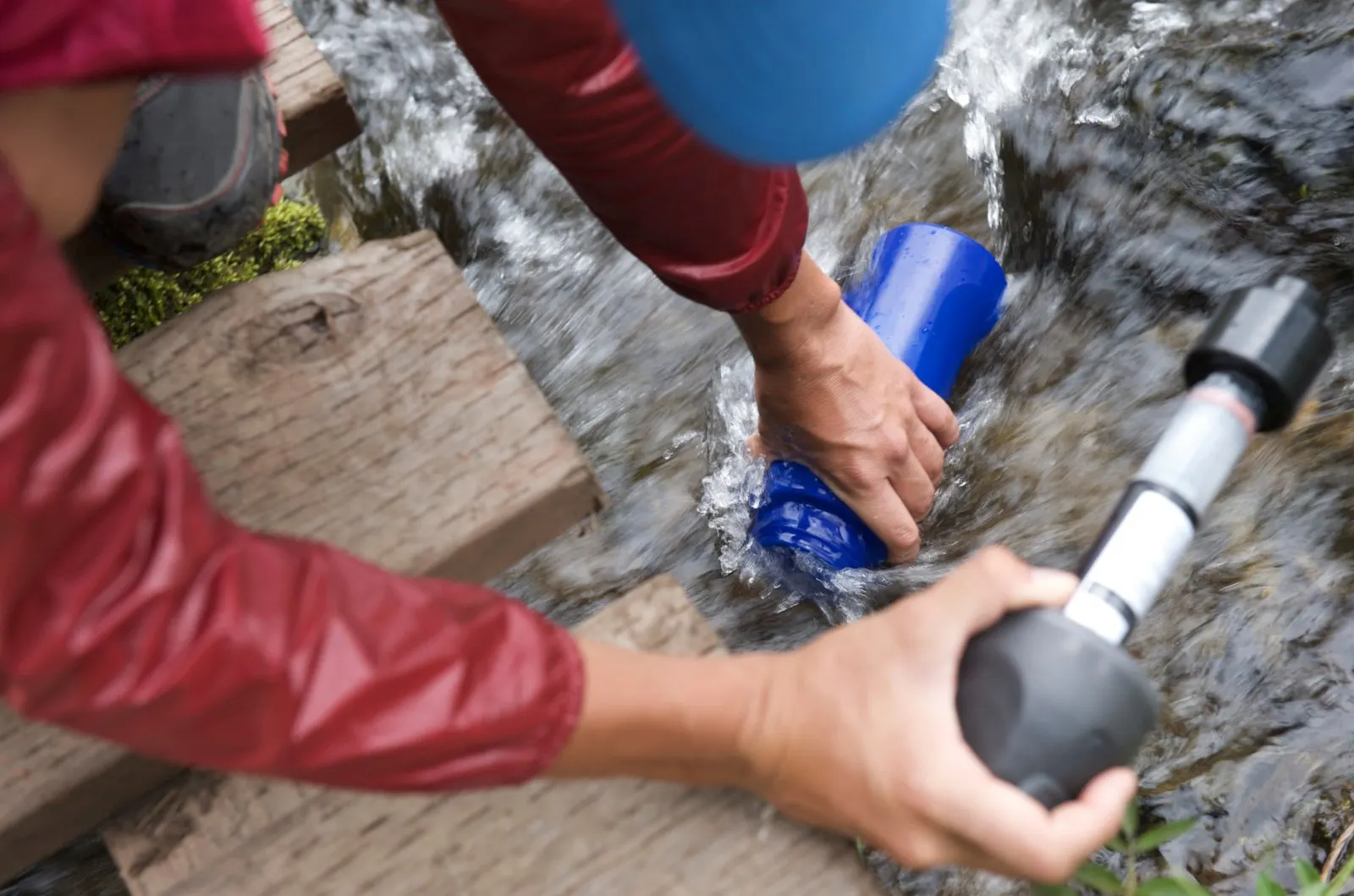
Emergency water filter in use: hands pumping water from a mountain stream
Photo: Image-Source / Envato

What is it?

A personal straw filter with a membrane microfilter. LifeStraw lists it for bacteria and parasites. Drink through it directly, screw it onto a compatible bottle, or connect it to a standard gravity hose.

Who is it for?

One person carrying a filter for use on the move. It fits a pocket of a pack.

How is it used?

Follow the model's user manual for preparation, cleaning and storage, and read it once at home before the filter goes into the kit.

Manufacturer information, not a hands-on test. Check the sources ↓

Three things to settle before you buy.

  1. 01

    Where will the water come from?

    Identify what made the water unsafe and follow your health department's instructions. CDC guidance explains which treatment each hazard needs.

  2. 02

    Who is drinking?

    A straw serves one person at a time. For household drinking and cooking, start with stored safe water.

  3. 03

    How will you keep it working?

    Read the model's user manual once at home, not for the first time in the dark.

Name the water before you name the filter.

The boil-water notice arrives by text at 7 a.m., right as somebody is filling the kettle. The tap still runs, and someone in the family will hold a glass up to the window and say “it looks fine, though”. Clear water proves nothing. Choosing an emergency water filter starts with knowing what made the water unsafe, on this kind of morning and on the hike where the only water is a stream.

Identify the suspected contamination and follow your health department’s instructions. CDC’s emergency water guidance explains which treatment each hazard needs, and a straw filter covers only part of that list.

What the straw does, and where it stops.

This page uses the LifeStraw Peak Series Straw as its example, because LifeStraw documents it clearly. It is a membrane microfilter that LifeStraw lists for bacteria and parasites. Drink through it directly, screw it onto a compatible bottle, or connect it to a standard gravity hose.

CDC states that portable filters do not remove viruses and advises disinfecting water after filtering. LifeStraw states that this model does not remove chemicals, heavy metals or dissolved salts. A stream can look perfect and still carry parasites, which is the “it looks fine, though” problem out in the woods.

If fuel or chemicals may be in the water, skip the filter entirely. CDC says boiling and disinfecting do not make chemically contaminated water safe. Find another source and call your health department.

One straw, one person.

For a day hike or the walk home when the roads are flooded, it fits a pocket of your pack and needs no power. It serves one person at a time, which becomes obvious the moment a family of four tries to share it.

For household drinking and cooking, start with the water storage guide and safe water at home. The straw is the backup for the walk out, not the plan for the house.

For a group, the filters people name in forum threads about emergency drinking water include gravity systems, and one comment suggests two Sawyer Squeeze kits for four people, so one is left if the other fails.

What reviewers and owners report.

GearJunkie’s tester found the Peak Series filter worked extremely well, with good flow (review). CleverHiker found it clogs in silty water and that suction gets tiring (review). One owner has never had trouble sucking through it and threads a bottle on the bottom and squeezes (owner post).

LifeStraw’s manual warns that freezing can damage the filter (manual), and the product page says the filter cannot be replaced. A straw that spent the winter in the car is a question mark.

Learn it at the kitchen table.

Check the full name before you compare listings: this page covers the Peak Series Straw, not every LifeStraw.

Open the user manual, follow its steps for preparation, cleaning and storage, and decide where the straw lives in your bag; the backpack checklist is built for that question.

A filter still sealed in its packaging helps nobody at 7 a.m. Neither does the person saying “it looks fine, though”, but at least they mean well.
Give water a place in your pack.

Keep the filter and its instructions where you can reach them. Then check the rest of your load before choosing the bag.

Use the backpack checklist →
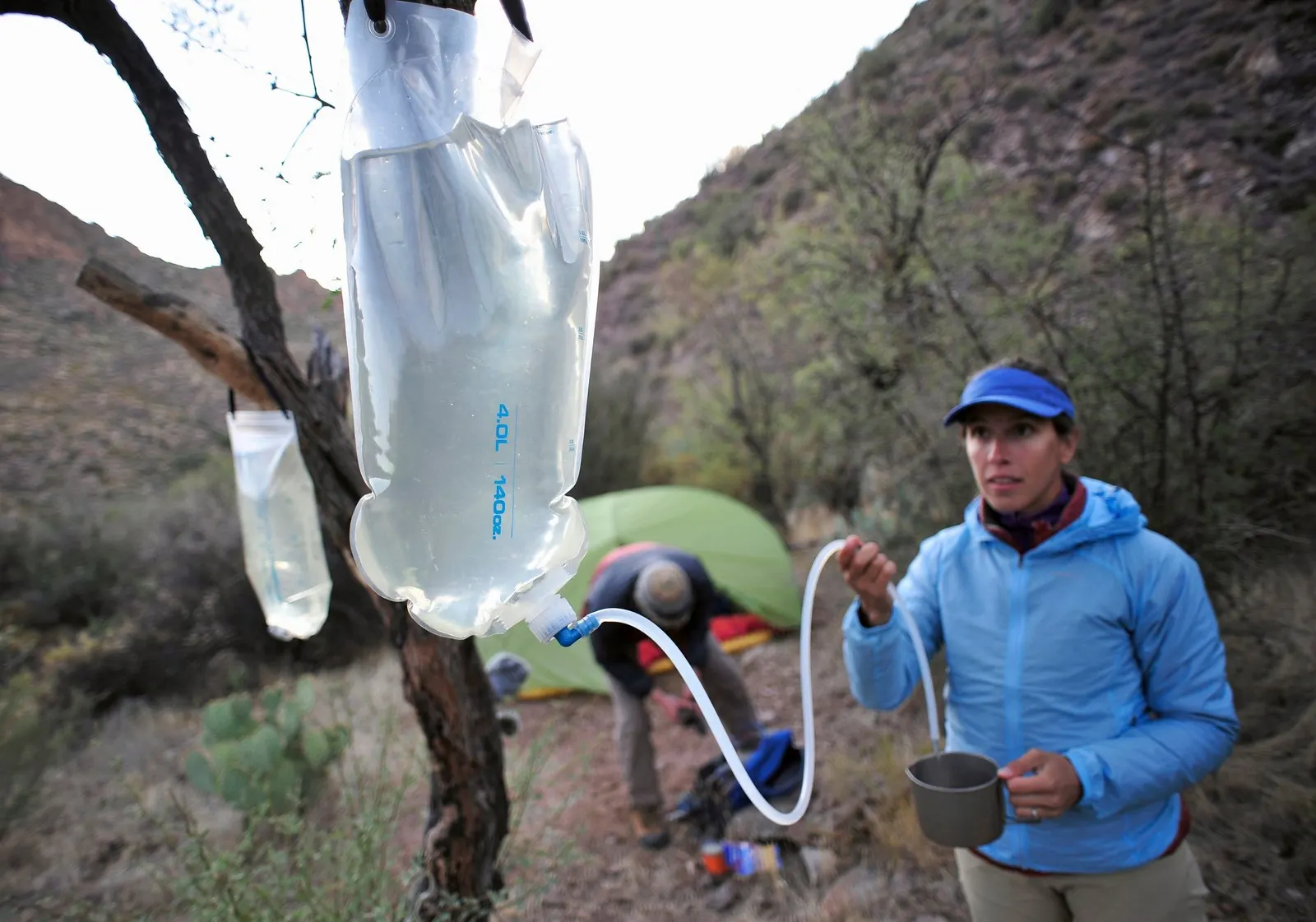
At a desert campsite, a woman fills a metal cup from a water bag hanging in a tree through a hose, with a tent behind her
Photo: ImageSourceCur / Envato

Main limitation

Targets bacteria and parasites. It does not remove viruses, chemicals, heavy metals or dissolved salts. For household drinking and cooking, stored safe water comes first.

Questions before you choose.

Does this straw remove viruses?

No. LifeStraw lists the Peak Series Straw for bacteria and parasites. CDC says portable filters do not remove viruses and advises disinfecting water after filtering. During a boil-water notice, follow your health department's instructions.

Can it make saltwater drinkable?

No. LifeStraw states that this model does not remove dissolved minerals and is not for saltwater or brackish water. A filter is not a desalinator.

Which should I buy first, a filter or stored water?

Stored water. A filter still needs a source and the right treatment for it. Start with stored safe water for home emergencies; the straw covers the walk out.

Where the information comes from.

Sources checked . Every product fact on this page comes from the documents below. We have not handled or tested these products ourselves.

  1. LifeStraw: Peak Series Straw

    Model page: filter type, what LifeStraw lists it as removing, bottle and gravity hose connections, link to the user manual.

  2. CDC: How to Make Water Safe in an Emergency ↗

    What portable filters remove and what they do not, when to boil or disinfect, and when water cannot be made safe at all.

  3. Reviews and owners: LifeStraw Peak Series Straw ↗

    Flow (GearJunkie); clogging and suction effort (CleverHiker, cleverhiker.com); an owner's bottle-and-squeeze use (r/backpacking); freezing damage per the user manual (shopify.com).

Photos are credited beside each image.

Privacy choices