APOCALYPSESURVIVALIST

NOAA Weather Radio: The Warning for When the Phone Goes Quiet

Apocalypse Survivalist is reader-supported. When you buy through our links, we may earn a commission. Learn more.

A NOAA weather radio needs reception where you would shelter, weather-alert monitoring switched on and power before it can warn you. Our example, the Midland ER310, has weather alerts plus hand-crank and solar backup power, but no S.A.M.E. county filtering.

Apocalypse Survivalist · Sources reviewed

See the model ↓
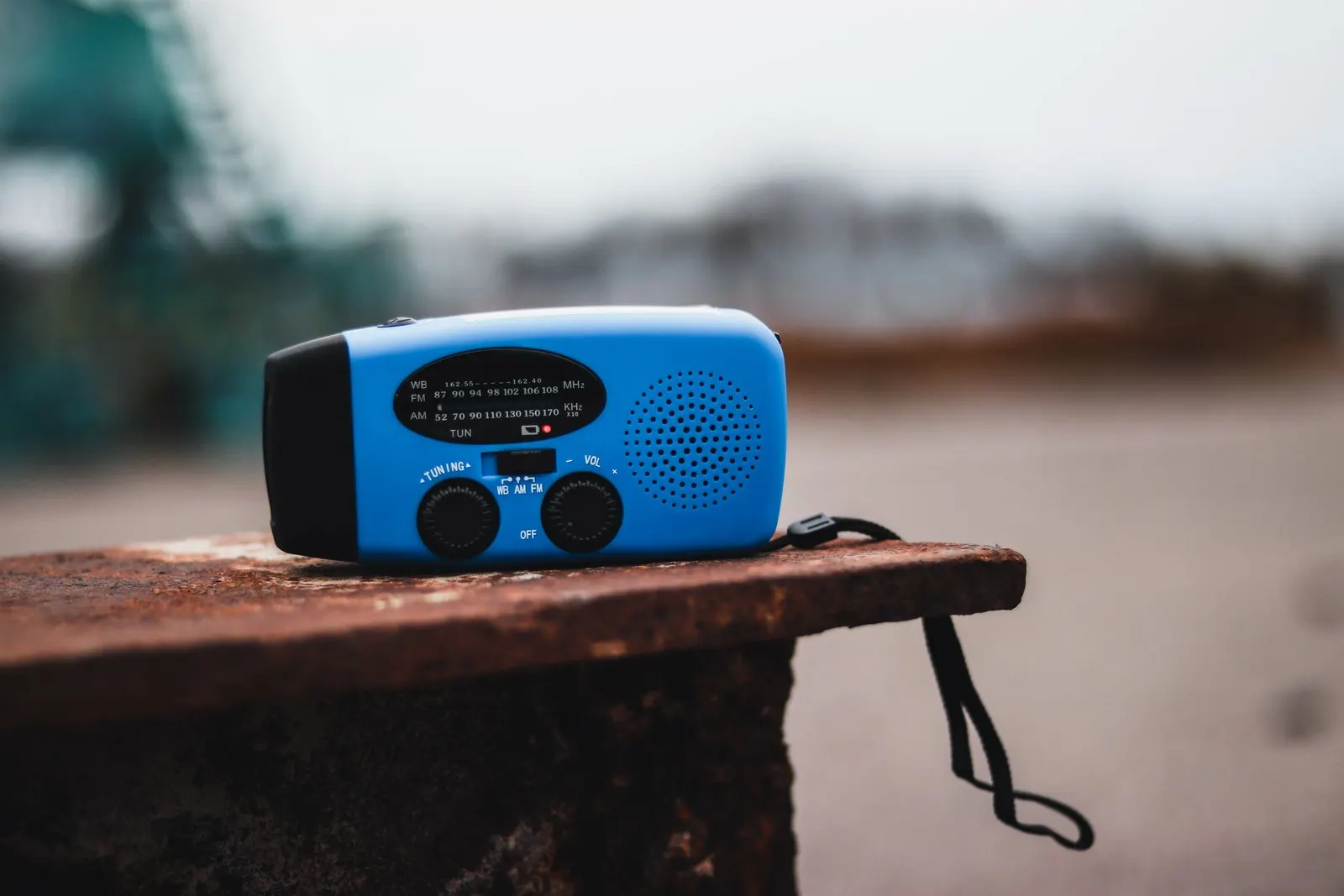
NOAA weather radio guide: a blue portable weather-band radio on a rusty metal ledge
Photo: wirestock / Envato

What is it?

A portable AM/FM and NOAA weather receiver with weather alerts. Midland lists a hand crank and a small solar panel among its power options.

Who is it for?

A household that wants broadcast weather warnings when the power and the cell network are down, and is willing to test reception in the room where the radio will live.

How is it used?

Tune it to the NOAA channel for your area and switch on weather-alert monitoring as the ER310 instructions describe. Midland's FAQ names a flashing WX indicator for that setting.

Manufacturer information, not a hands-on test. Check the sources ↓

Three checks before you trust it.

  1. 01

    Can it hear your station?

    Test it in the room where it will live. If that is the shelter room, the kitchen counter is only the audition.

  2. 02

    Is the alert actually armed?

    Hearing the weather channel is one setting. Alert monitoring is another. On the ER310, a flashing WX indicator tells you it is listening.

  3. 03

    What powers it on day three?

    Crank and solar are backups, not a plan. Decide which battery, cable or charger keeps it running, and where that lives.

When the phone goes quiet.

Every family has one person who could sleep through a marching band. At 2 a.m. the tornado watch turns into a warning, the power is out, the cell tower is busy, and the phone on the nightstand has been silent for an hour. A NOAA weather radio is built for that gap. An alert-capable receiver can sound an alarm when it is set up, powered and receiving the broadcast. Whether the champion sleeper joins the rest of the household is another question.

Test it where you would actually hide.

The National Weather Service says reception depends on where you are, the terrain and the building around you. A coverage map is a promise about the map, not about your kitchen.

So test it in the room you would shelter in. If reception is poor there, you have learned it in daylight, which is the cheap way to learn it.

Arm the alert, then show everyone the light.

Hearing the weather channel and being alerted by it are two different settings. Tune the radio to your local channel and switch on weather-alert monitoring as its instructions describe. On the Midland ER310, the example below, Midland’s FAQ names a flashing WX indicator for that setting. Show it to the whole house, so nobody switches it off because “it was blinking”. Follow the alert-monitoring instructions for your exact model.

Our example, and where it stops.

Our example is the Midland ER310. Midland lists AM/FM, NOAA weather channels, weather alerts, and several power options, including a hand crank and a small solar panel. A junk drawer of power in one box.

Here is the catch. Midland says its ER portable series lacks S.A.M.E., the county filtering that lets a receiver stay quiet for warnings outside your area. If a 3 a.m. alarm for the next county over would make you unplug the radio for good, buy one that lists S.A.M.E. A radio that is switched off warns nobody.

What owners report.

One owner of both the ER310 and the smaller ER210 calls the weather alarm “quite loud; certainly enough to wake you up” (owner post). The champion sleeper has been warned. Another owner says theirs alerts for thunderstorms well outside their own area (owner post). And one owner’s telescopic antenna broke off (owner post), so treat it gently.

Plan the power before you trust a number.

Midland’s documents disagree on battery capacity and runtime, so check the battery and instructions in the box you buy.

The solar panel cannot bring a dead battery back and does not replace a normal charge. And while the USB output is charging a phone, the radio functions are interrupted. So the teenager quietly topping up their phone from the weather radio has, for that moment, switched off the alerts. Give the phone its own emergency power bank.

Keep the radio, manual and cables in one place, practise once in daylight with everyone, and add it to your regular check of the gear list.
Keep a light beside the radio.

Put the receiver, its instructions and a light where you can reach them. Check the controls while you can still read the manual.

Read the headlamp guide →
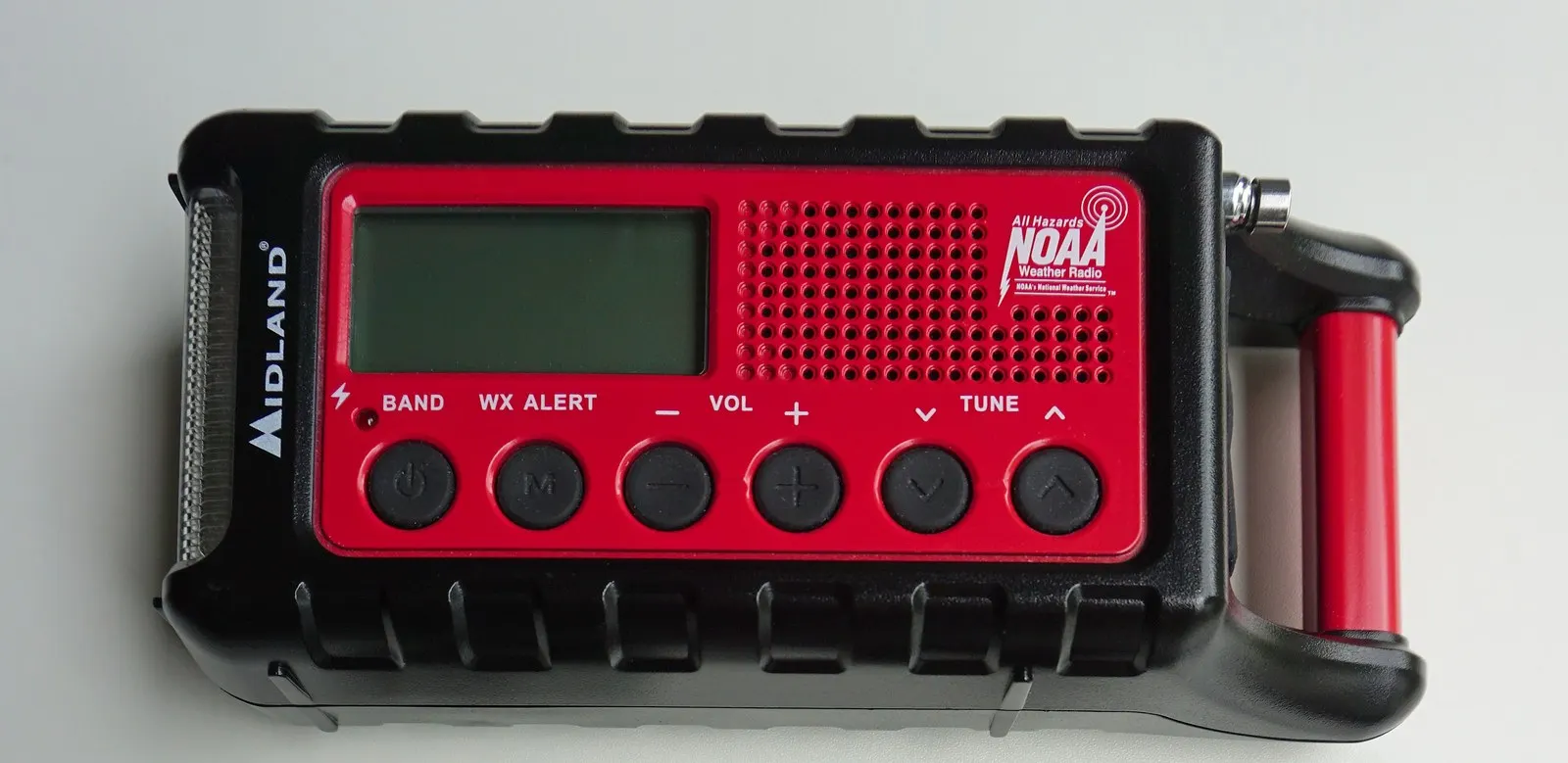
A red Midland ER310 emergency weather radio on a light surface
Photo: Nancy Zjaba / Pexels

Main limitation

No county filtering. Midland says its ER portable series lacks S.A.M.E., so you cannot use that feature to limit alerts to a selected county.

Questions before you choose.

Can the ER310 alert only for my county?

No. Midland says its ER portable series lacks S.A.M.E. county filtering. If county-level alerts matter to you, choose a receiver that lists S.A.M.E. and follow its location setup.

If I can hear NOAA, are alerts ready?

Not yet. The ER310 has to be tuned to your channel with weather-alert monitoring switched on and power available. Midland's FAQ points to a flashing WX indicator as the sign that monitoring is armed.

Will the solar panel bring a dead battery back?

No. Midland says the panel cannot charge a dead battery and is not meant to replace a full charge. Charge it the normal way first, and treat the sun and the crank as backup.

Where the information comes from.

Sources checked . Every product fact on this page comes from the documents below. We have not handled or tested these products ourselves.

  1. Midland: ER310 product information

    Receiver and power features. Battery capacity and runtime differ between Midland documents; confirm the revision in the box.

  2. Midland: ER310 FAQs

    Channel selection, the flashing WX alert indicator, and what the solar panel can and cannot charge.

  3. Midland: NOAA Weather Radio FAQs

    Which Midland receivers support S.A.M.E. county filtering and which ER portable models do not.

  4. Midland: ER310 owner-support article

    Standby alerts, and the interruption of radio functions while the USB output powers another device.

  5. National Weather Service: weather-radio receivers ↗

    Alert features, geographical filtering and backup power, independent of any brand.

  6. National Weather Service: NOAA Weather Radio reception ↗

    Why reception varies with location, terrain and buildings, and why a coverage range is not a promise for your address.

  7. Owner reports on Reddit: Midland ER310 ↗

    Alarm volume (ER310 and ER210 owner); alerts outside the owner's area (r/CBUSWX); a broken antenna (r/MilwaukeeTool). Owners' words, not our testing.

Photos are credited beside each image.

Privacy choices