APOCALYPSESURVIVALIST

Portable Knife Sharpener: Match the Tool to Your Knife's Edge

Apocalypse Survivalist is reader-supported. When you buy through our links, we may earn a commission. Learn more.

Work Sharp Guided Field Sharpener — WSGFS221 — Guided Field Sharpener / WSGFS221Check price on Amazon

Work Sharp Guided Field Sharpener — WSGFS221

Pick it if you want one small sharpener with angle guides for a dull camp knife, plus a rod for fish hooks.

Also compared here

A portable knife sharpener must suit your knife's edge and its maker's maintenance instructions. The Work Sharp Guided Field Sharpener has sharpening guides at 20° per side and honing and stropping guides at 25°; the Smith's Pocket Pal SP-50918 uses preset pull-through slots.

Apocalypse Survivalist · Sources reviewed

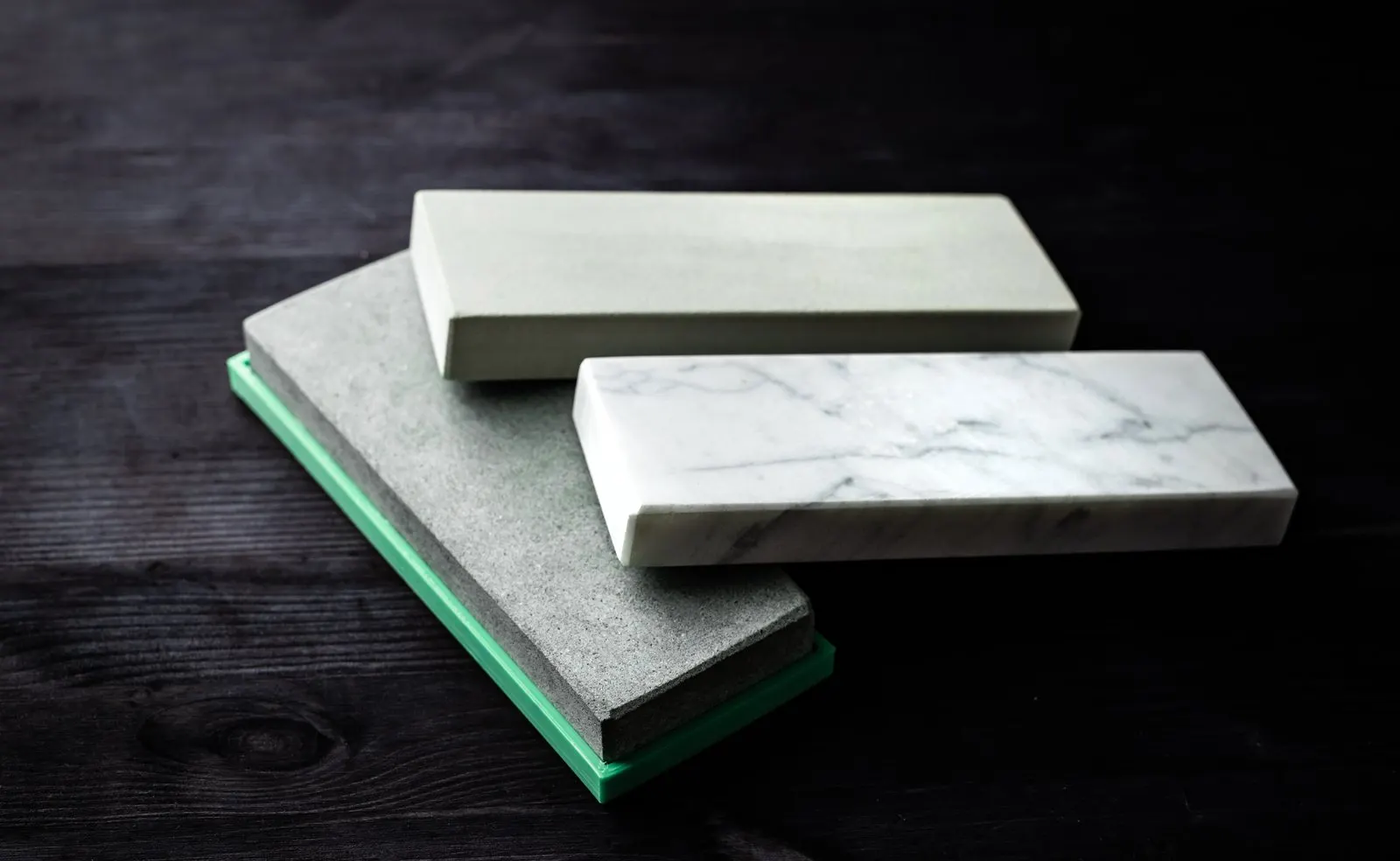
Portable knife sharpener stones laid out on a dark wooden surface
Photo: AFGreen / Envato

Work Sharp Guided Field Sharpener

What is it?

A manual pocket sharpener with coarse and fine diamond plates, ceramic rods and a leather strop. The model is WSGFS221.

Who is it for?

Someone willing to learn a hand technique and to check that the tool's guide angles suit the edge they want to keep.

How is it used?

Follow the illustrated guide. The sharpening guides sit at 20° per side; the honing and stropping guides at 25° per side.

Manufacturer information, not a hands-on test.

Check the sources ↓

Two formats, two decisions.

Compare how each tool controls the angle and which edges it is meant for. Neither is presented as a fit for every knife in our guide; the numbers identify the tools, not a ranking.

  1. 01

    Work Sharp Guided Field Sharpener — WSGFS221

    Coarse and fine diamond plates, ceramic rods and a leather strop. The manual distinguishes sharpening at 20° from honing and stropping at 25°, per side.

    Pick it if: you want one small sharpener with angle guides for a dull camp knife, plus a rod for fish hooks.

    What owners and reviewers say

    An owner says it is built to turn "won't work" into "good enough for now" out in the field.Owner on r/sharpening, 2024

    Another owner used it as their only sharpener for three years and kept a working edge, but never got a razor edge.Owner on r/Leatherman, 2023

    An owner reports that the plates lost grit and their fine diamond plate wore out.Owner on r/sharpening, 2024

  2. 02

    Smith's Pocket Pal — SP-50918

    Preset carbide and ceramic pull-through slots plus a folding diamond rod. Smith's specifies the carbide stage for straight edges and describes the rod for serrations.

    Pick it if: you want a backup of about one ounce to bring a basic camp knife back to a working edge, not a main sharpener.

    What owners and reviewers say

    HiConsumption says it removes a lot of material and would not use it on premium blade steel.HiConsumption guide

    BladeReviews would not recommend it as a primary sharpener or for higher-end knives.BladeReviews review (older PP1 version)

    An owner runs their knives through it when they stop cutting nicely, and finds that good enough.Owner on r/knifeclub, 2015 (version not stated)

    Nearly all reviews test the older PP1, not this soft-grip 50918 version.

Check the blade before the tool.

  1. 01

    Which edge are you keeping?

    Write down the exact knife, its edge type and the maker's maintenance instructions. Two knives from one camping list can need different treatment.

  2. 02

    Touch-up or repair?

    A quick touch-up and a chipped edge are different jobs. Pick the process for the job instead of starting on the coarsest surface every time.

  3. 03

    Where will you learn it?

    Read the instructions before the trip and set up the stable position they ask for. A pocket-sized tool still needs careful hands.

Start with the knife, not the sharpener.

Somewhere in your kitchen there may be a sharpener still in its packaging, apparently waiting for a formal invitation. Halfway through a camping trip, the camp knife slides off a carrot instead of cutting it, and someone asks whether you brought “the thing for that”. A portable knife sharpener fixes that evening only if it matches the edge the knife already has.

So start with the knife: its full model name and what its maker says about keeping the edge. Then decide whether the job is a quick touch-up at camp or a repair at home.

Guided by hand, or preset slots.

With the Work Sharp you move the blade across the abrasive, using the guides as a reference. With the Smith’s slots the abrasive arrangement is preset and you pull the blade through. The question for both is whether that geometry matches the edge you intend to keep.

If the instructions do not settle it, ask the knife maker or the sharpener maker. Do not reshape a blade to fit the tool you happen to own.

The Work Sharp, as the example.

The Work Sharp Guided Field Sharpener, WSGFS221 has coarse and fine diamond plates, ceramic rods and a leather strop, with sharpening guides at 20° per side and honing and stropping guides at 25°.

The manual reserves the coarse plate for repairs and angle changes rather than routine touch-ups. It asks for a handle grip or a flat, stable surface and says not to rest the tool on yourself, which sounds obvious until you are sitting on a log with everything on your knee.

Check the exact Pocket Pal version.

Smith’s sells several similarly named tools; the one compared here is the Pocket Pal SP-50918: carbide and ceramic pull-through slots and a folding diamond rod. Smith’s specifies the carbide stage for straight edges and describes the rod for serrations, so “straight and serrated” on a box is not permission to use every part on every edge.

What owners and reviewers report.

A MeatEater writer’s Guided Field Sharpener is ten years old, has gone just about everywhere and still does what they need (review). One owner calls it the first sharpener that got their knives consistently sharp (owner post). One owner used it as their only sharpener for three years, keeping a working edge but never a razor edge (owner post), and one found the fine diamond plate wore out (owner post).

HiConsumption reports that the Pocket Pal it reviewed removes a lot of material (review); the version tested is not confirmed as the SP-50918.

Pack it, and tell the kitchen.

Decide where the tool rides in the backpack and how the blade stays covered next to it. For an axe or hatchet, go back to the hatchet guide and that model’s care instructions.

Before it goes in the bag, know which blade it is for and which instructions you will follow. Nobody at dinner wants a surprise change of angle. And when the camp knife gets borrowed for the tomatoes at home, send along the sharpener matched to that blade. Consider that its formal invitation.
Make room for maintenance.

Choose where the tool goes and how the blade stays covered beside it. Check that arrangement with the rest of the load.

Use the backpack checklist →
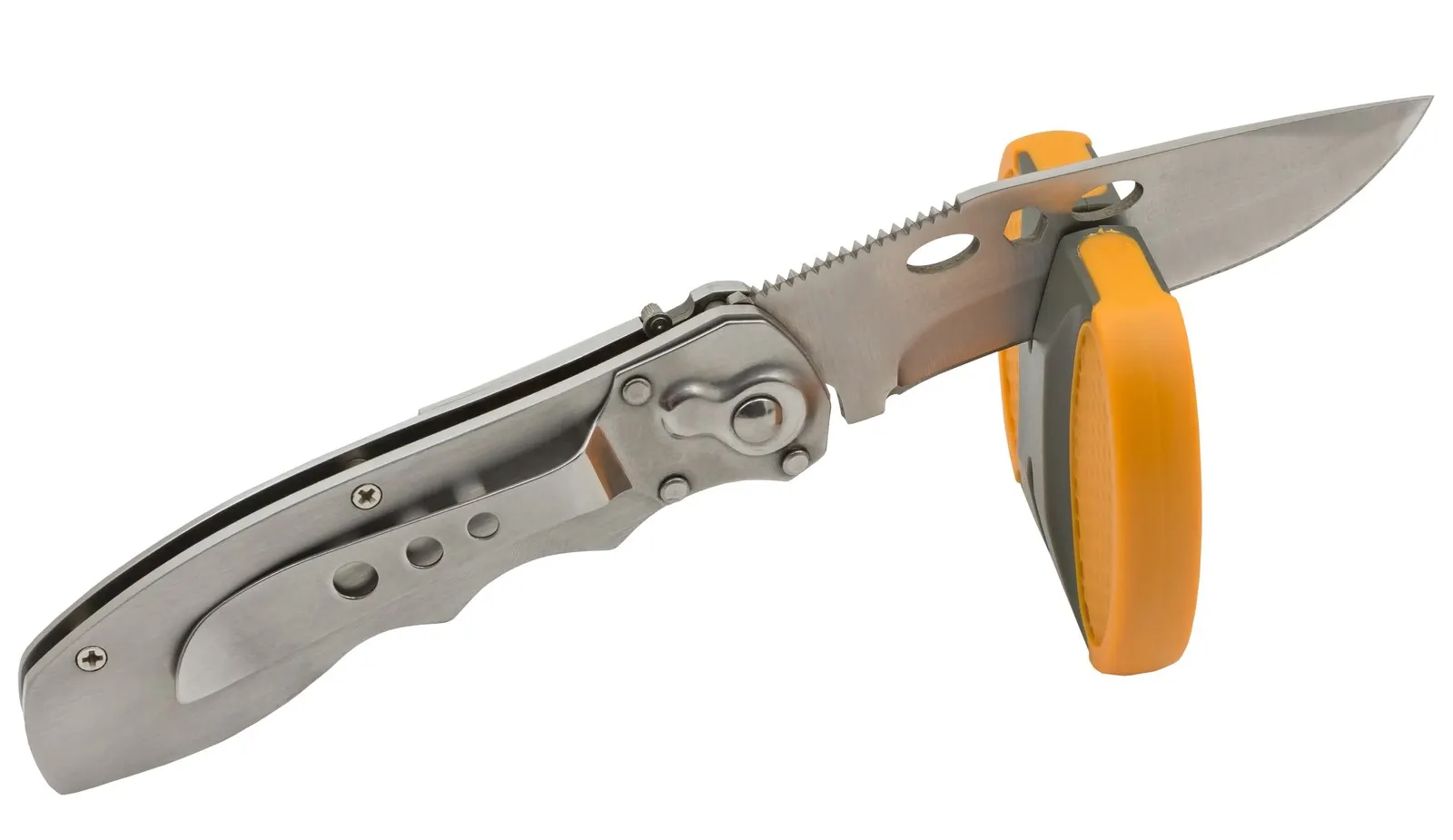
A folding knife resting against an orange pocket sharpening tool on a white background
Photo: PedaltotheStock / Envato

Main limitation

The guides do not set the right angle for every knife. Check the blade maker's instructions before changing the edge geometry it came with.

Questions before you choose.

Should every camping knife be sharpened at 20° per side?

No. Start from the knife maker's geometry and care instructions; 20° is where this Work Sharp's sharpening guides sit, which may or may not match your blade.

Can serrations go through the carbide slot?

Smith's specifies the SP-50918 carbide stage for straight edges and describes the diamond rod for serrations. Use the stage the maker permits for the actual blade.

Do these tools need electricity?

No, both are manual. They still need the right technique, the right surface for the job and a stable position; portable does not mean automatic.

Where the information comes from.

Sources checked . Every product fact on this page comes from the documents below. We have not handled or tested these products ourselves.

  1. Work Sharp: Guided Field Sharpener WSGFS221

    Model, abrasive types and guide angles. The page's coarse-grit numbers are inconsistent, so this guide does not repeat them.

  2. Work Sharp: illustrated user's guide

    Linked from Work Sharp's manual page. Sharpening, honing, stropping, serrations and safe positioning; use the instructions supplied with your own revision.

  3. Smith's: Pocket Pal SP-50918

    Version, stages and which edges each stage is for. The page gives no numeric preset angle.

  4. Reviews and owners: Work Sharp and Pocket Pal ↗

    A ten-year-old Work Sharp (MeatEater); owner reports on consistency (r/knives), a working rather than razor edge (r/Leatherman) and a worn fine plate (r/sharpening); carbide material removal (HiConsumption, hiconsumption.com).

Photos are credited beside each image.

Privacy choices